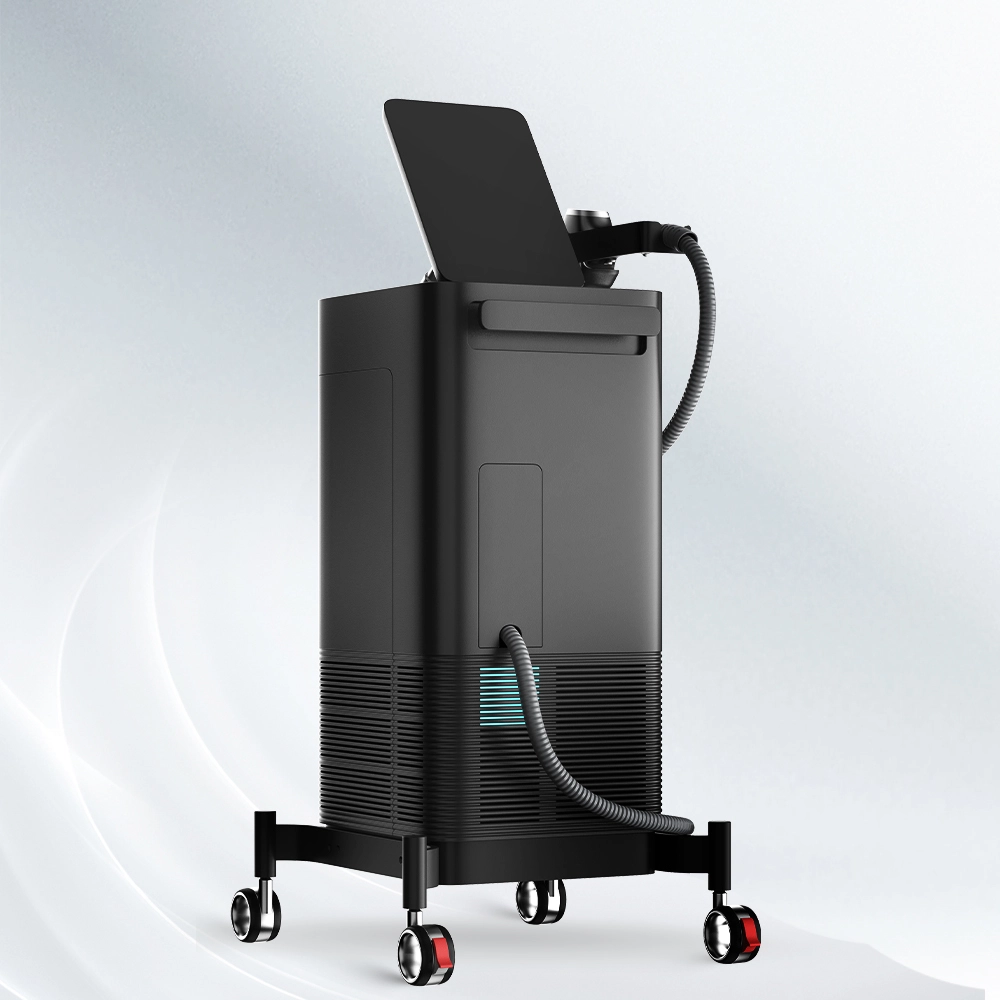
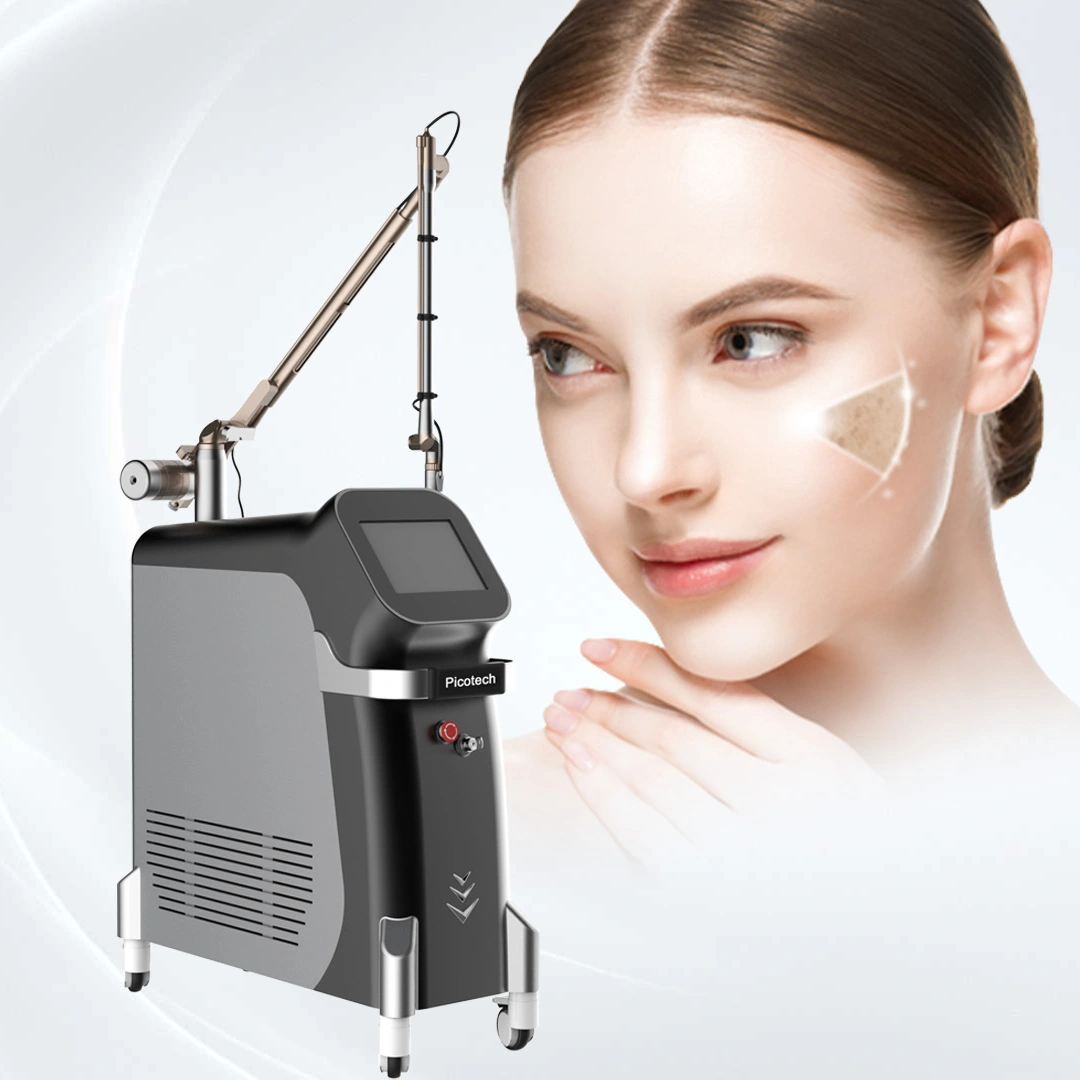
Picosecond laser technology has earned a strong reputation in the aesthetic industry. It is fast, precise, and capable of delivering impressive results for tattoo removal, pigmentation treatment, and skin rejuvenation. Many clinics have invested in pico laser machines and built successful services around them.
But no technology is perfect. If you are considering adding a picosecond laser to your clinic, or if you are a distributor evaluating whether to carry pico laser equipment, you need to understand the full picture — including the limitations and disadvantages that suppliers do not always talk about.
This article gives an honest, balanced look at the real drawbacks of pico laser technology. Our goal is not to discourage investment, but to help B2B buyers make informed decisions that match their business model and client expectations.
The most obvious disadvantage of pico laser technology is the price tag. A professional-grade picosecond laser machine typically costs significantly more than a traditional Q-switched Nd:YAG laser system with similar power output.
For a clinic just entering the tattoo removal or pigmentation market, this higher upfront investment increases payback time. For distributors, the higher wholesale price can limit your addressable market to established clinics and medical spas with larger capital budgets.
It is worth asking whether your local market actually demands picosecond technology, or whether a well-built Q-switched Nd:YAG laser machine can deliver sufficient results at a more accessible price point. In many markets, Q-switched lasers remain the workhorse of tattoo removal services, and clients are satisfied with the outcomes.
That said, pico laser machines command higher per-session pricing in premium markets, which can justify the investment if your client base values speed and reduced treatment sessions.
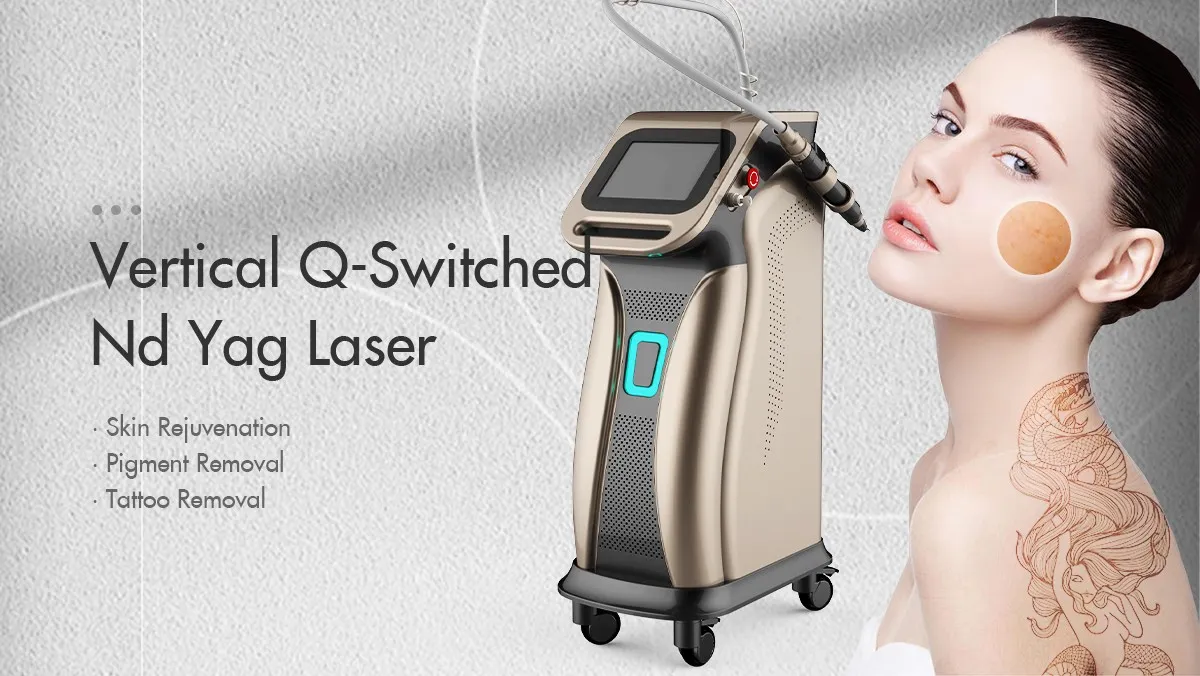
Picosecond lasers operate on extremely short pulse durations — measured in picoseconds, or trillionths of a second. This ultrafast energy delivery behaves differently on tissue than nanosecond Q-switched pulses, and it requires operators to understand concepts like:
Photoacoustic effect vs. photothermal effect
Optimal fluence settings for different ink densities and skin types
Proper spot size selection to avoid unintended tissue damage
Post-treatment protocols specific to pico laser sessions
Clinics that invest in a pico laser without allocating sufficient time and budget for staff training often see inconsistent results, higher client dissatisfaction, and even adverse events like hypopigmentation or textural changes.
If your team is already experienced with Q-switched systems, they will need dedicated retraining. This hidden cost — in both time and money — is often underestimated during the purchasing process.
For a deeper technical background, read our article on how the picosecond laser works.
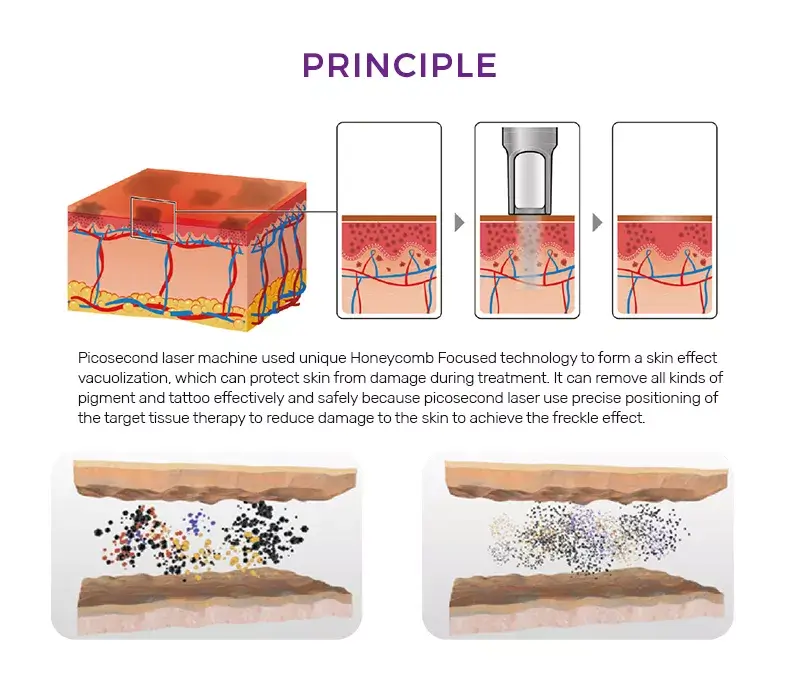
This surprises many buyers. Despite the marketing claims, picosecond lasers are not universally effective on all tattoo ink colors.
The 755nm wavelength commonly used in pico systems is excellent for black, dark blue, and green inks. However, lighter colors like yellow, orange, and some red inks can be stubborn regardless of pulse duration. In these cases, a Q-switched laser with a 532nm wavelength may actually outperform a picosecond system.
Similarly, cosmetic tattoos (permanent makeup) and amateur tattoos with high iron oxide content can turn dark or gray after pico laser treatment — a phenomenon known as paradoxical darkening that frustrates both technicians and clients.
Clinics need to set realistic expectations during consultation. Promising clients that a pico laser will remove any tattoo completely in fewer sessions is a recipe for complaints and refund requests.
Our article on Q-switched laser and picosecond laser: which one is better provides a detailed side-by-side comparison of color-specific performance.
Marketing materials often emphasize that picosecond lasers require "fewer sessions" than Q-switched lasers. While this can be true for some tattoos, it is not a universal rule — and the difference is sometimes smaller than clients expect.
Professional multicolor tattoos, dense blackwork, and tattoos on areas with poor circulation (fingers, ankles, lower legs) still typically require 8–12 sessions or more for complete removal, even with picosecond technology. Clients who expect a tattoo to vanish in 3–4 sessions will be disappointed.
From a business perspective, "fewer sessions" also means lower total revenue per client unless the clinic charges a premium per session. Some clinics find that the higher equipment cost of a pico laser is not fully offset by the economics of slightly shorter treatment plans.
For guidance on managing client expectations, see what to expect during picosecond laser machine sessions.
Picosecond lasers are generally safe for Fitzpatrick skin types I–IV, but they require extra caution with darker skin tones (V–VI). The ultrafast pulse duration reduces thermal damage risk compared to nanosecond devices, but it does not eliminate it entirely.
On darker skin, improper settings can still cause:
Post-inflammatory hyperpigmentation (PIH)
Hypopigmentation
Texture changes or scarring in rare cases
Additionally, pico laser is not appropriate for clients with:
Active skin infections or open wounds in the treatment area
Recent sun exposure or tanning
Certain autoimmune conditions affecting skin healing
Pregnancy or breastfeeding
Keloid-prone skin history
Clinics need thorough consultation protocols and trained staff who can identify contraindications. A rushed consultation to maximize booking volume increases liability risk.
For skin-type-specific guidance, read our article on laser hair removal for different skin types, which covers principles applicable across laser modalities.
Professional picosecond laser machines are complex devices with sophisticated optical systems, precision power supplies, and advanced cooling mechanisms. This complexity translates into:
Higher spare parts costs — Replacement handpieces, optical components, and power modules are typically more expensive than those for Q-switched systems
More specialized technical support — Not every laser technician can service a pico laser; you may depend heavily on the manufacturer for repairs
Longer repair turnaround times — If a critical component fails and must be shipped back to the factory, your machine could be offline for weeks
For distributors, this means your customers will expect faster parts availability and stronger technical support than they need for simpler devices. If your supply chain or technical team is not prepared for this, customer satisfaction will suffer.
Before purchasing, always ask the manufacturer about warranty terms, spare parts pricing, and average repair turnaround time. A two-year warranty is the professional standard, but the real test is how quickly they respond when something breaks.
In many developed markets, picosecond laser services have become commoditized. The "pico laser" name carries marketing power, but consumers are also more price-sensitive than ever. A clinic that invested $50,000+ in a pico system may find itself competing with lower-priced providers using refurbished units or entry-level machines.
For distributors, this means the premium positioning of pico laser equipment is under pressure in some regions. You may need to invest more in marketing and client education to justify the higher price point to end users.
In emerging markets where tattoo removal demand is growing but price sensitivity is high, a reliable Q-switched Nd:YAG tattoo removal machine may actually be the smarter first purchase, with a pico laser added later as a premium upgrade option.
While pico lasers are marketed for skin rejuvenation — treating melasma, fine lines, and enlarged pores — the results in these applications are sometimes more modest than marketing suggests.
For deep wrinkles, significant skin laxity, or acne scars, other technologies often deliver more dramatic results:
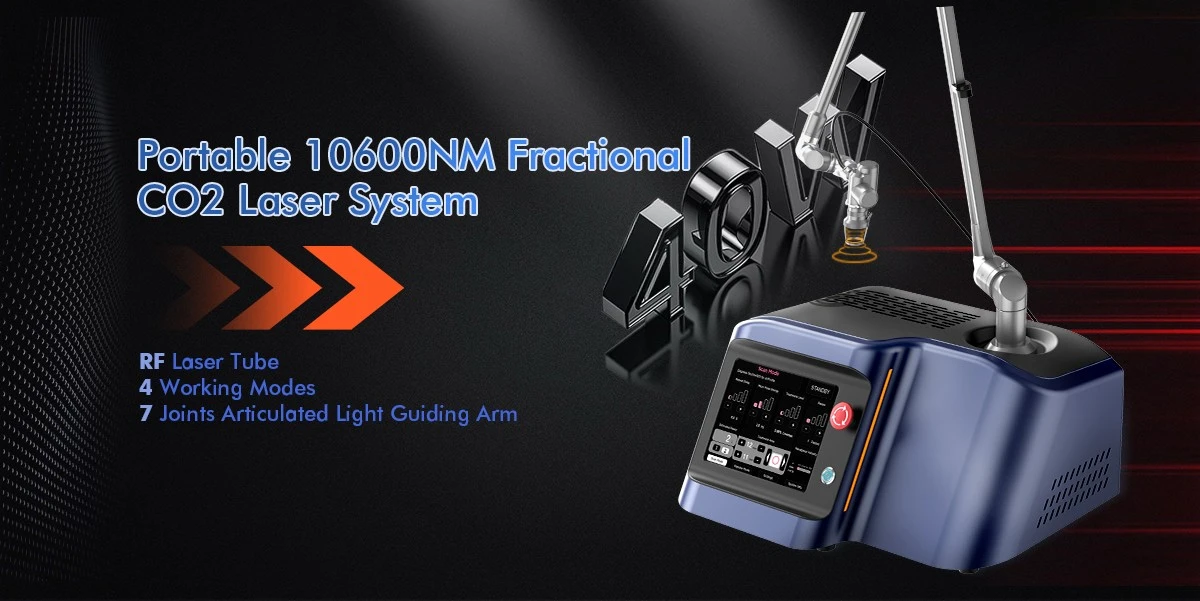
Fractional CO2 laser — Superior for deep resurfacing, acne scar revision, and significant wrinkle reduction
RF microneedling — Strong option for texture improvement, pore reduction, and collagen induction with less downtime than ablative lasers
DPL skin rejuvenation — Effective for pigmentation, vascular lesions, and general photorejuvenation at a lower cost point
Clinics that position pico laser as a "do everything" device may find client satisfaction drops when rejuvenation results do not meet expectations. It is better to market pico laser honestly for what it excels at — tattoo removal and selective pigmentation — while offering other devices for different concerns.
Understanding the limitations does not mean avoiding pico laser technology. It means approaching it strategically:
Match the machine to your market — Premium markets with high tattoo removal demand justify pico investment; price-sensitive markets may not
Budget for training — Allocate resources for comprehensive staff education before treating paying clients
Set honest expectations — Explain realistic session counts, color limitations, and possible side effects during consultation
Build a multi-technology menu — Complement pico laser with Q-switched, CO2 fractional, or RF devices to address cases where pico is not the best tool
Negotiate service terms upfront — Secure clear warranty, spare parts pricing, and technical support commitments from your supplier
For more on building a complete treatment menu, read our guide on understanding picosecond laser tattoo removal machines.
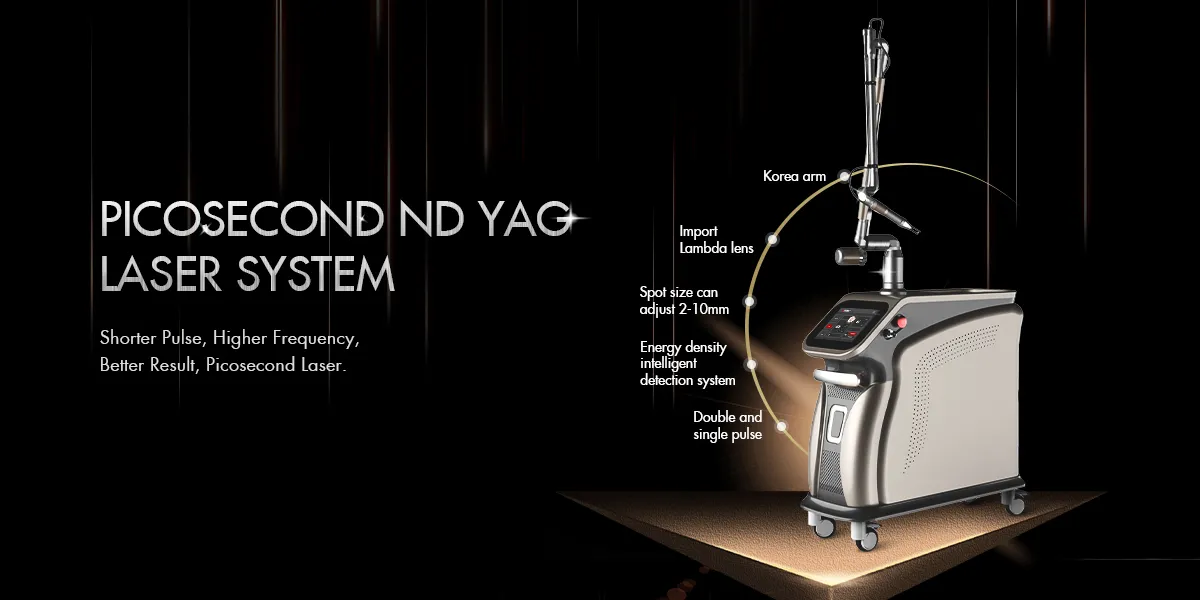
Over years of working with distributors worldwide, we have heard the same concerns repeatedly. Here are honest answers to the questions distributors ask most often before committing to a pico laser product line.
A: It depends on your region and target segment. In major metropolitan areas of North America, Western Europe, and East Asia, pico laser is well-known and competition is intense. However, in secondary cities, emerging markets, and medical-aesthetic segments (as opposed to pure beauty salons), demand is still growing. The key is positioning — distributors who focus on certified clinics and medical spas with trained staff generally perform better than those selling to untrained beauty parlors where results suffer and reputation damage spreads quickly.
A: Most successful distributors carry both. Q-switched Nd:YAG lasers serve the broader market with lower price points and proven reliability. Pico lasers capture the premium segment willing to pay for advanced technology. Offering both allows you to serve clinics at different budget levels and growth stages. Many clinics start with a Q-switched system and upgrade to pico as their business grows.
A: With a quality manufacturer, the first-year failure rate for pico laser systems should be under 3–5%. The main service issues are typically handpiece wear, cooling system maintenance, and occasional power supply replacement. The critical factor is whether your manufacturer stocks spare parts locally or ships from overseas — this determines whether a repair takes 3 days or 3 weeks. Always clarify this before signing a distribution agreement.
A: Most professional manufacturers offer territory-based distribution agreements, but exclusivity usually comes with minimum order quantity (MOQ) commitments and annual sales targets. Be realistic about your market size and sales capacity before committing to exclusivity. A non-exclusive agreement with favorable terms is often better than an exclusive agreement you cannot fulfill.
A: Requirements vary by country. Common requirements include CE Medical (Europe and many international markets), FDA clearance (United States), and local medical device registration. Ask your manufacturer for a complete certification package and confirm whether they have experience registering in your specific country. Some manufacturers offer regulatory support as part of the distribution partnership.
A: Most complaints stem from unrealistic expectations set during the sales or consultation process. The best defense is honest upfront communication about what pico laser can and cannot do. Provide your clinic clients with standardized consultation scripts, before-and-after photo protocols, and informed consent documents. When complaints do occur, manufacturer technical support should help determine whether the issue is equipment settings, technician technique, or simply a case where pico laser was not the right tool for that specific tattoo or skin condition.
A: Margins vary by market and positioning, but distributors of professional aesthetic equipment typically target 30–60% markup over landed cost. Pico lasers command higher absolute margins than Q-switched lasers due to their higher price point, but turnover is usually slower. The most profitable distributors combine equipment sales with consumables, training packages, and ongoing service contracts.
A: Compete on reliability, certification, and support — not price. Cheap machines with fake power ratings, no real CE/FDA documentation, and no spare parts support create liability for your customers and reputational risk for you. Educate your clinic clients on what to look for in a quality system: real certification documents, factory audit reports, reference customers they can contact, and a clear service warranty. Clinics that have been burned by cheap equipment once usually become loyal to quality suppliers.
Picosecond laser technology is genuinely advanced and delivers real benefits for the right applications and the right markets. But it is not a magic solution, and it is not the best choice for every clinic or distributor.
The disadvantages — high cost, steep learning curve, color limitations, ongoing maintenance, and market pressures — are real and should factor into your business planning. Buyers who understand these limitations upfront make better purchasing decisions, set more realistic client expectations, and build more sustainable businesses.
If you are evaluating picosecond laser machines for your clinic or distribution network, SANHE LASER offers a full range of options from professional pico systems to reliable Q-switched alternatives. We provide transparent technical specifications, full certification packages, comprehensive training support, and competitive distributor terms.
Contact our team to discuss your market, your goals, and which laser technology aligns best with your business strategy.

Sales Director: Mark Ren
The Bei Jing San He Tech Co., Ltd is dedicated to driving continuous growth and innovation in the beauty machine industry. With over 12 years of experience in sales and marketing, I am well-versed in market trends and customer needs. I firmly believe that high-quality products and exceptional service are key to winning the market. I always focus on product quality and customer experience, ensuring that every customer enjoys the most advanced and effective beauty solutions.

 English
 日本語
日本語 français
 Deutsch
 Español
 italiano
 русский
 português
 العربية
 Ελλάδα
 فارسی
فارسی