If you are considering laser hair removal for the Brazilian area, two questions almost certainly top your list: how many sessions will it take, and will the results last forever? These are fair questions, because the bikini zone behaves very differently from the legs or underarms, and misleading marketing has made "permanent" one of the most abused words in the aesthetics industry.
The honest answer: most people need 6 to 8 sessions for a Brazilian, and the correct industry term is permanent hair reduction — not permanent hair removal. In this article, we break down exactly why those numbers apply, what affects your individual result, and what clinics should communicate to clients before the first session.
For a full Brazilian treatment (all hair removed from the pubic region, including sensitive areas), the typical range is:
6 to 8 sessions for the average client with dark, coarse hair and light-to-medium skin
8 to 12 sessions for clients with hormonal influences (PCOS, thyroid conditions), fine or light-colored hair, or darker skin tones requiring conservative settings
1 to 2 maintenance sessions per year after the initial course to keep results stable long-term
Sessions are spaced 4 to 6 weeks apart. The bikini area responds a little more slowly than the underarms because hair density is high and the region is strongly influenced by hormones — which is why "6 sessions" is a realistic average, not a hard promise.
Anyone guaranteeing complete clearance in 3 sessions is overselling. Hair biology does not allow it.
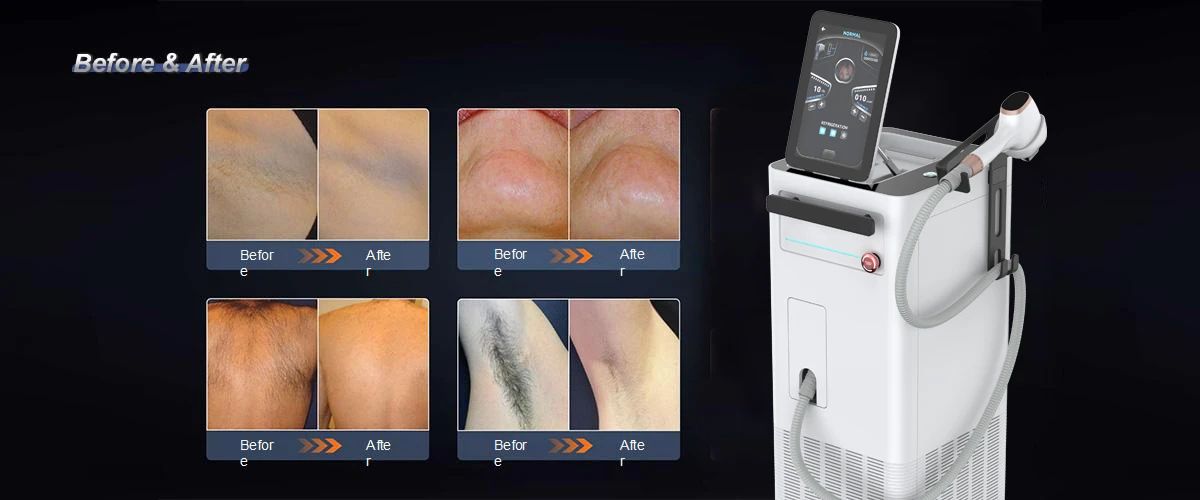
Laser hair removal only works on hair in the anagen (active growth) phase. At any given moment, only about 20–30% of your hair is in this phase; the rest is in catagen (transition) or telogen (resting), where the follicle contains no target for the laser.
Here is the simple logic behind the session count:
Each session destroys the follicles that are actively growing at that moment
The treated hairs shed over 1–3 weeks after the session
Resting follicles "wake up" weeks later — and they must be treated in a following session
Repeating this cycle 6–8 times catches nearly all follicles in their vulnerable window
This is also why shaving between sessions is fine (and encouraged), while waxing or plucking between sessions is counterproductive — it removes the very structure the laser needs to target. For a deeper explanation of the mechanism, see our guide on what the 808nm diode laser hair removal treatment is.
Two clients can follow the same protocol and finish with very different results. These are the variables your technician — or your clinic — should assess before quoting a number:
1. Hair and skin contrast. The laser targets melanin in the hair shaft. Dark, coarse hair on lighter skin responds fastest. Fine, blonde, red, or grey hair contains little melanin and responds slowly or not at all.
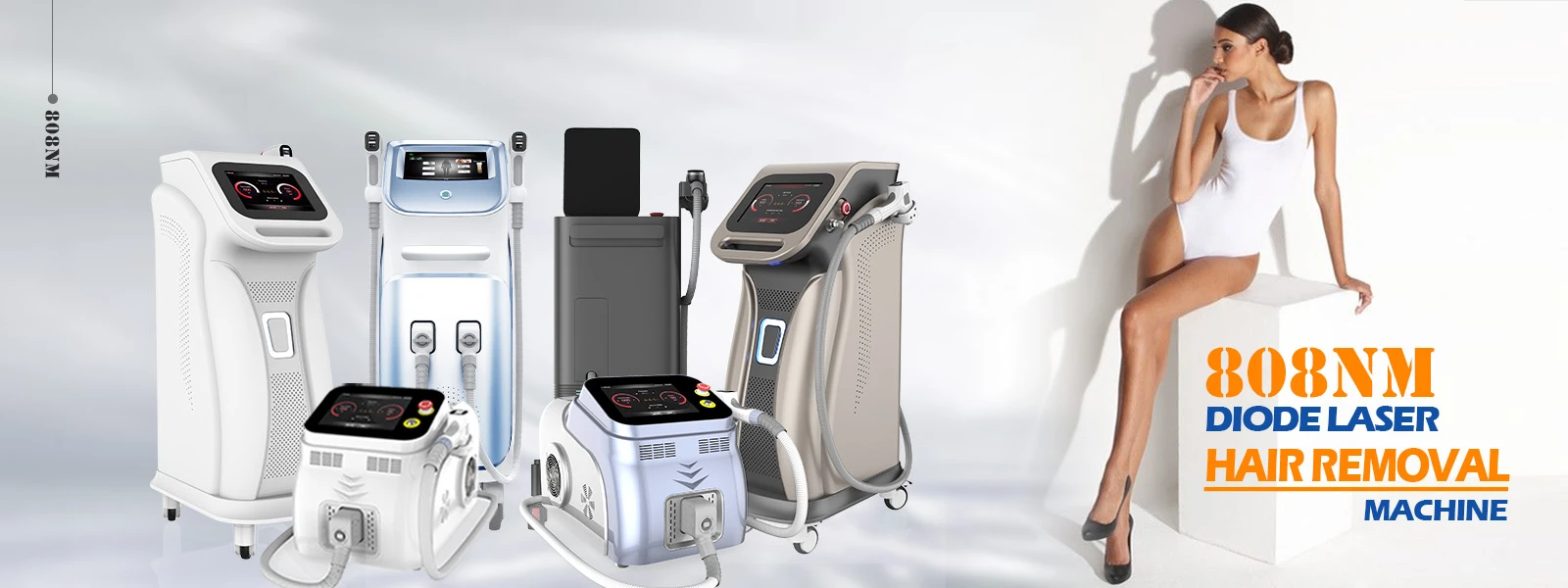
2. Skin tone and wavelength selection. Clients with Fitzpatrick IV–VI skin need longer wavelengths to bypass surface melanin safely. A triple or four-wavelength diode system (755nm + 808nm + 940nm + 1064nm) treats all skin types in one platform, while single-wavelength or older IPL devices struggle with darker skin. Our article on laser hair removal for different skin types covers this in detail.
3. Hormones. The bikini area is androgen-sensitive. Clients with PCOS or hormonal fluctuations may see new follicles activate even after a full course — which is exactly why honest clinics quote a range, not a fixed number.
4. Treatment consistency. Stretching intervals beyond 6–8 weeks lets resting follicles re-enter growth without being caught. Staying on schedule is the cheapest way to reduce your total session count.
5. Equipment quality and settings. Underpowered machines or overly cautious energy settings simply require more sessions to reach the same result. Fluence, spot size, pulse duration, and skin-cooling all matter. Modern 4-wavelength diode laser platforms with contact cooling let clinics treat Brazilian areas safely at effective energies — protecting the skin while destroying the follicle.
This is where industry terminology matters. The FDA defines the cleared claim as "permanent hair reduction" — a stable, long-term decrease in the number of regrowing hairs after a treatment course. What that means in practice:
After a complete course, most clients keep a 70–90% reduction in the treated area for years
Remaining hair is typically finer, lighter, and much sparser
Some follicles are genuinely destroyed permanently; others are miniaturized and may partially recover over time
Annual or semi-annual touch-up sessions keep the area virtually hair-free indefinitely
So is it permanent? Partially, and effectively so with maintenance. Destroyed follicles do not come back. But your body can activate dormant follicles — especially in hormonally sensitive zones like the Brazilian area — and new hair can appear years later due to aging, medication, or hormonal change.
This is not a flaw of the technology; it is biology. Clinics that set this expectation honestly enjoy higher client satisfaction and better retention than clinics that promise "one course, forever smooth." For a dedicated discussion, read does diode laser remove hair permanently?
For clients preparing for their first appointment:
Shave the area 24 hours before — never wax, pluck, or use depilatory cream for 4 weeks prior
Avoid sun exposure and tanning for 2–4 weeks; tanned skin increases side-effect risk
The session itself takes 15–30 minutes for a Brazilian
With modern contact cooling, most clients describe the sensation as a warm pinch or rubber-band snap, well tolerated without numbing cream
Mild redness subsides within a few hours; avoid hot showers, gyms, and friction for 24–48 hours
Treated hairs shed gradually over 1–3 weeks — this shedding is a sign the treatment worked
Expect visible thinning from session 2 or 3, with the biggest improvement between sessions 4 and 6.
The Brazilian is one of the highest-demand laser services worldwide — and one of the most question-heavy. Clients who understand the 6–8 session reality complete their courses instead of abandoning them after three sessions, which directly improves clinic revenue per client.
From an equipment perspective, the Brazilian zone rewards machines that combine:
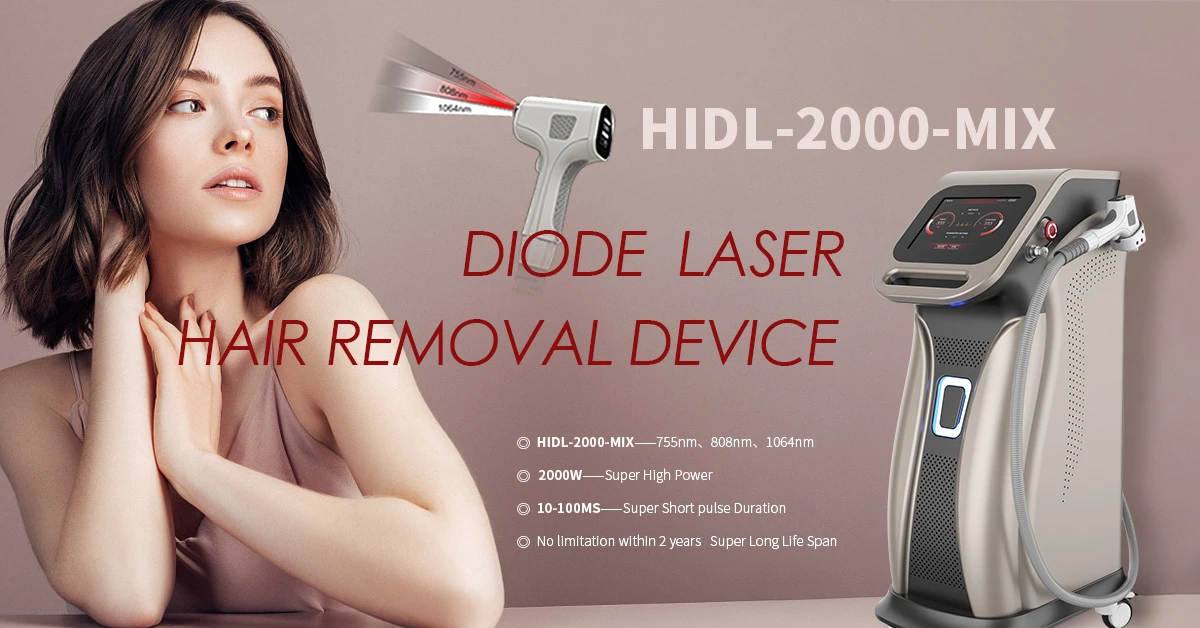
Multiple wavelengths (755/808/940/1064nm) so every Fitzpatrick skin type can be treated safely at full energy
High power (2000W–3000W) for fast coverage of a dense area and effective follicle damage in fewer passes
Effective contact or air cooling — comfort is the deciding factor for sensitive-area repeat bookings
Multiple spot sizes to switch quickly between broad zones and precise edges
You can explore our hair removal laser treatment solutions and diode laser machine range, including 4-wavelength diode hair removal laser machines and triple-wavelength diode laser machines built for high-volume clinic use.
Q1: How many sessions does a Brazilian really take — minimum?
Realistically, six. Clients with ideal hair/skin contrast sometimes see strong results by session 5, but four or fewer sessions rarely delivers stable reduction in the bikini zone because of its hormonal sensitivity.
Q2: Why does the Brazilian need more sessions than underarms?
Higher hair density and androgen influence. The pubic region has more follicles per square centimeter and more hormonally driven regrowth, so more follicles must be caught across multiple growth cycles.
Q3: Is laser hair removal permanent for the Brazilian area?
It delivers permanent reduction: destroyed follicles stay gone, but dormant follicles can activate later. Most clients keep 70–90% reduction long-term with 1–2 maintenance sessions per year.
Q4: How long should I wait between Brazilian sessions?
4 to 6 weeks is standard for the bikini area. Waiting longer than 8 weeks lets too many resting follicles complete a full cycle, adding sessions to your total course.
Q5: Does Brazilian laser hair removal hurt?
Most clients rate it 2–4 out of 10 with modern diode systems that use contact cooling. The sensation is a quick warm snap per pulse, and a full session takes only 15–30 minutes.
Q6: Can dark skin tones get Brazilian laser hair removal safely?
Yes — with the right wavelength. A 1064nm Nd:YAG handpiece or a multi-wavelength diode system bypasses surface melanin, making treatment safe for Fitzpatrick V–VI skin when operated by a trained technician.
Q7: What happens if I stop after 3 sessions?
You will see real reduction, but regrowth will be noticeably higher than after a full course, because most resting follicles were never treated. The hairs that do return are usually finer and lighter.
Q8: Is IPL or diode laser better for a Brazilian?
Diode laser is generally superior for this zone: it targets coarse, deep bikini follicles more precisely and works across more skin types. Our IPL vs. laser hair removal comparison breaks down the trade-offs.
A Brazilian typically needs 6–8 laser hair removal sessions, spaced 4–6 weeks apart, with possible touch-ups once or twice a year afterward. The result is genuinely long-term — permanent hair reduction, not the marketing fantasy of "permanent removal in three visits." Clients who plan around the realistic number get the smooth, lasting result they signed up for; clinics that communicate it honestly build trust, complete courses, and repeat bookings.
If you are a distributor, clinic owner, or med spa looking for diode laser hair removal machines that deliver consistent Brazilian results across all skin types, contact us today to learn more about:
Product specifications and latest 4-wavelength configurations
TUV CE, ISO 13485, FDA and TGA certifications
OEM/ODM solutions and distributor cooperation models
Pricing and two-year warranty support
Email: [email protected] | WhatsApp: +86 136 8127 5833

Sales Director: Mark Ren
The Bei Jing San He Tech Co., Ltd is dedicated to driving continuous growth and innovation in the beauty machine industry. With over 12 years of experience in sales and marketing, I am well-versed in market trends and customer needs. I firmly believe that high-quality products and exceptional service are key to winning the market. I always focus on product quality and customer experience, ensuring that every customer enjoys the most advanced and effective beauty solutions.


 English
 日本語
 français
 Deutsch
 Español
 italiano
 русский
 português
 العربية
 Ελλάδα
 فارسی