If you have spent any time researching aesthetic light-based treatments, you have almost certainly come across the terms IPL and DPL. They are often mentioned together, sometimes used interchangeably in marketing materials, and frequently confused by both clients and industry newcomers.
The confusion is understandable. DPL (Dye Pulsed Light) is essentially an evolution of IPL (Intense Pulsed Light) technology, and both devices treat similar concerns — unwanted hair, pigmentation, redness, and overall skin rejuvenation. But there are meaningful differences between them, and understanding these differences matters if you are choosing equipment for a clinic or building a product line as a distributor.
This article breaks down the real, practical differences between DPL and IPL — not just the technical jargon, but what each technology actually means for your treatment results, your clients, and your bottom line.
To understand the difference between DPL and IPL, you first need to understand how pulsed light technology works at a basic level.
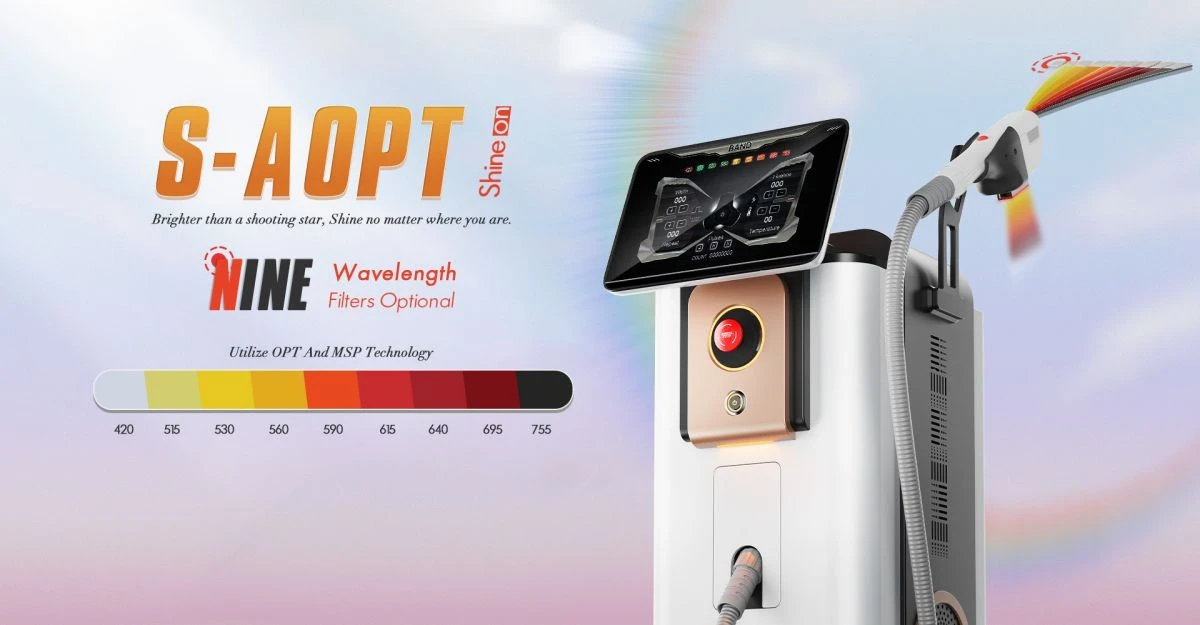
IPL (Intense Pulsed Light) devices emit a broad spectrum of light, typically ranging from about 400nm to 1200nm. Think of it as a wide flash of white light filtered through a crystal or glass slide. The broad spectrum allows the light to target multiple chromophores — melanin in hair, hemoglobin in blood vessels, and water in the skin — making IPL a versatile multi-purpose tool.
However, that versatility comes with a trade-off. Much of the energy in a broad-spectrum flash is absorbed by tissue that does not need treatment. This can mean unnecessary heat in the skin surface, more discomfort during treatment, and a higher risk of side effects on darker skin types.
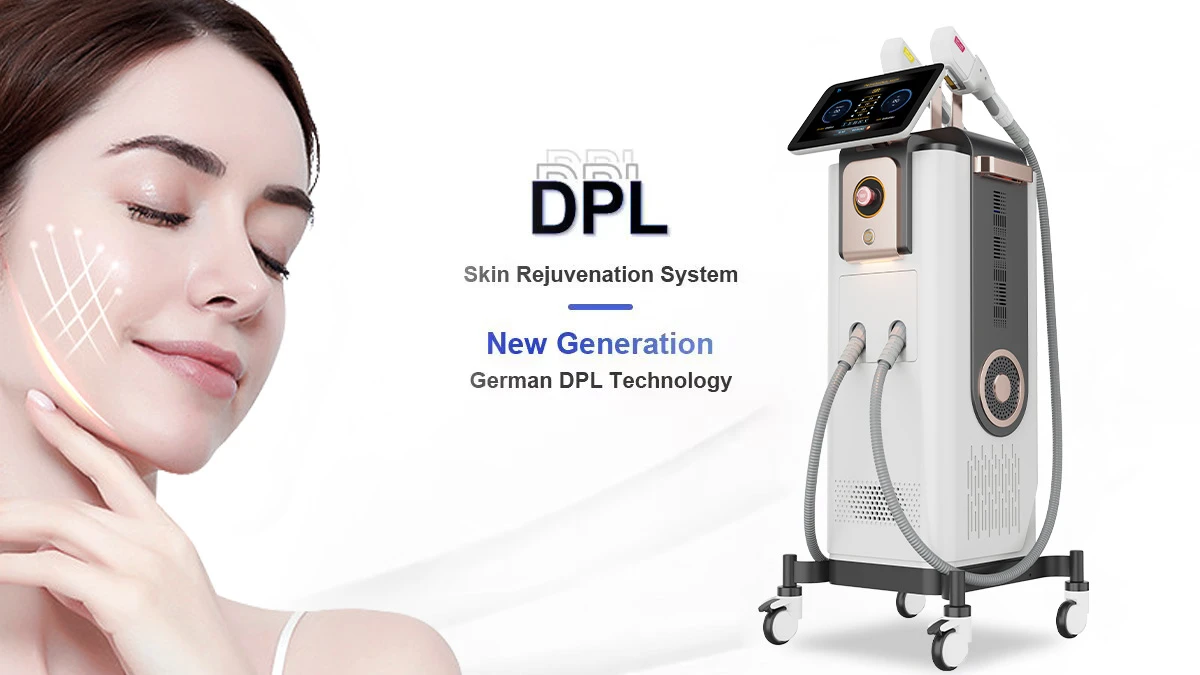
DPL (Dye Pulsed Light) solves this by narrowing the spectrum. Using special dye filters or advanced crystal technology, DPL machines filter out unnecessary wavelengths and deliver a much narrower band of light — typically in the 500nm to 650nm range. The result is light that is more precisely targeted, more efficient, and significantly more comfortable for the client.
Our DPL machine uses advanced narrow-spectrum technology to deliver this precision, while our IPL E-Light machines offer the traditional broad-spectrum approach that many established clinics are familiar with.
For a more detailed technical background on IPL, see our article on how IPL hair removal machines work.
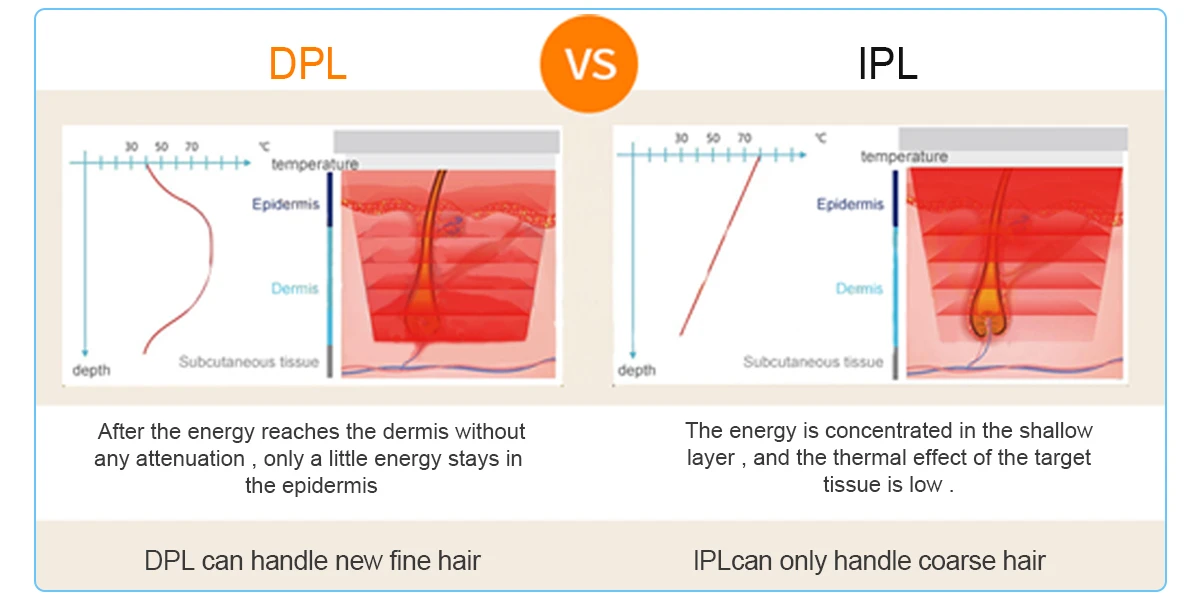
The spectral difference between DPL and IPL translates directly into how each technology performs in the treatment room.
Both DPL and IPL can reduce unwanted hair effectively, but they work differently:
IPL relies on broad-spectrum light that includes wavelengths absorbed by both the hair follicle and the skin surface. This works well for clients with light skin and dark hair — the ideal contrast scenario — but becomes riskier for darker skin types or tanned skin. Treatment sessions may require more passes, and the risk of post-inflammatory hyperpigmentation is higher.
DPL delivers concentrated energy in the melanin-absorption sweet spot, allowing effective follicle targeting with less surface heating. This means safer treatments on a wider range of skin tones, fewer passes per area, and less discomfort. Many technicians report that DPL achieves visible hair reduction in fewer sessions than traditional IPL on comparable clients.
Learn more in our article on what is the benefit of DPL hair removal machines.
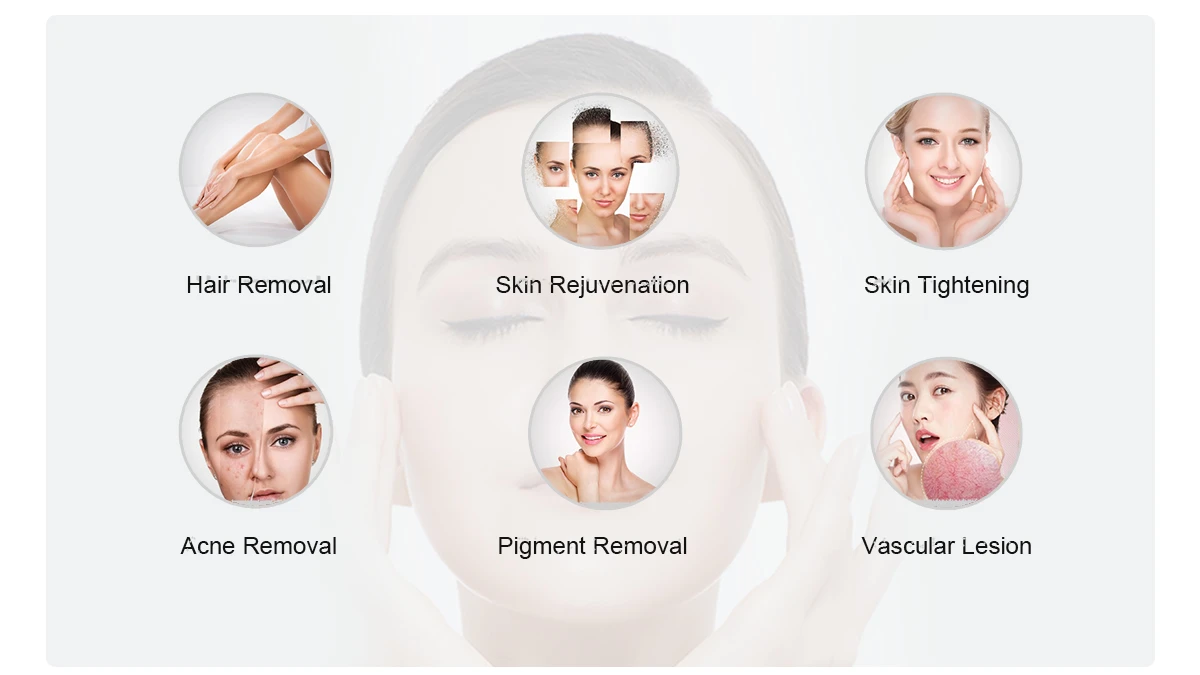
This is where the gap widens noticeably. Because DPL's narrow spectrum more precisely targets hemoglobin and melanin, it excels at:
Facial redness and rosacea management
Broken capillaries and telangiectasia
Sun spots and age spots with sharper contrast against surrounding skin
Overall skin tone evening and brightening
Traditional IPL can address these concerns too, but the broader spectrum means more energy is scattered into non-target tissue. Clients often need more sessions to achieve the same results, and the risk of post-treatment redness or swelling is higher.
For clinics focused on photofacials and skin rejuvenation as a primary service, DPL typically delivers a better client experience and more consistent outcomes. Our DPL skin rejuvenation machine is designed specifically for these applications.
Small facial vessels and stubborn pigmentation lesions respond more predictably to DPL's precise wavelength targeting. The narrow spectrum reduces the chance of collateral thermal damage to surrounding tissue, which is especially important on the face where precision matters most.
Ask any experienced technician about the most common client complaint during light-based treatments, and the answer will be pain or discomfort. This is an area where DPL makes a significant practical improvement over traditional IPL.
Because DPL filters out wavelengths that contribute to surface heating without adding therapeutic value, clients experience:
Less sensation of heat on the skin surface
Fewer "rubber band snap" sensations that characterize IPL treatments
Reduced post-treatment redness and warmth
Lower risk of blistering or pigmentation changes
For clinics, this translates into better client retention, more positive reviews, and fewer hesitant rebookings. Clients who have experienced both technologies often specifically request DPL for future treatments.
That said, modern IPL machines with advanced cooling systems — such as our IPL SHR laser hair removal machine — have closed the comfort gap considerably. SHR (Super Hair Removal) mode delivers energy gradually rather than in a single intense pulse, making treatments far more comfortable than older IPL systems. If you are comparing a basic IPL device against a DPL, DPL wins on comfort. If you are comparing a modern SHR-IPL device against a DPL, the difference is smaller but still favors DPL in most treatment scenarios.
Both DPL and IPL machines can cover large treatment areas relatively quickly compared to laser devices with small spot sizes. However, DPL's higher efficiency per pulse — meaning more useful energy reaches the target with each flash — often translates into fewer passes per area.
In practical terms:
A full face photofacial with DPL may take 15–20 minutes
The same treatment with IPL may take 20–30 minutes, plus additional time for skin cooling between passes
Full leg hair removal with DPL typically requires fewer total sessions to achieve comparable results
For high-volume clinics, this efficiency compounds across a full treatment day. Faster sessions mean more clients served, more revenue per room, and better utilization of your equipment investment.
The 2-in-1 DPL hair removal machine combines hair removal and skin rejuvenation capabilities in a single platform, maximizing both treatment range and room efficiency.
This is one of the most important practical differences between the two technologies.
IPL works best on Fitzpatrick skin types I–III (light to medium skin) with dark, coarse hair. On darker skin types (IV–VI), the melanin in the epidermis competes with the melanin in the hair follicle for light absorption, creating a higher risk of burns, blistering, and post-inflammatory hyperpigmentation. Treating darker skin with IPL requires significant operator skill, conservative energy settings, and careful cooling — and even then, results are less predictable.
DPL, with its narrow spectrum, reduces the amount of energy absorbed by surface melanin. This makes it a safer option for skin types up to IV and, in the hands of experienced technicians with appropriate settings, for some type V clients as well. The margin for error is larger, and the risk profile is significantly better.
If your clinic serves a diverse, multi-ethnic client base, this difference alone may justify choosing DPL over IPL. Our article on laser hair removal for different skin types covers these principles in more detail.
For clinics that need to serve darker skin types safely, a diode laser hair removal machine is worth considering alongside or instead of either DPL or IPL. Diode lasers at 808nm are the most established technology for safe, effective hair removal across all Fitzpatrick skin types.
Price is where IPL traditionally has the advantage.
IPL machines are generally less expensive upfront, with entry-level professional systems available at accessible price points. Replacement parts and consumables are also typically cheaper.
DPL machines carry a moderate price premium due to the more advanced filtering technology inside. However, the gap has narrowed considerably in recent years as DPL has become more widely adopted.
When evaluating total cost of ownership, consider:
Number of sessions clients need (fewer sessions with DPL = lower total client cost and higher per-session profitability)
Client retention rates (comfortable treatments = more rebookings and referrals)
Range of services you can offer (DPL's superior photofacial capability adds revenue streams)
Lamp or cartridge lifespan (both technologies use consumable flash lamps that need periodic replacement)
In many markets, the higher per-session pricing that DPL commands — justified by better results and client comfort — quickly offsets the modest equipment premium.
Our comprehensive guide to DPL facial machines covers the full range of DPL capabilities and configurations available to clinics today.
The answer depends on your specific situation:
Your budget is limited and you need the lowest-cost entry into light-based treatments
Your client base is predominantly light-skinned (Fitzpatrick I–III)
Hair removal is your primary service and skin rejuvenation is secondary
You want a well-established technology with decades of clinical history
You want to offer premium photofacial and skin rejuvenation services with superior results
Your client base includes diverse skin tones
Client comfort and treatment experience are competitive differentiators in your market
You want to reduce the number of sessions clients need, improving rebooking rates and satisfaction
You are establishing a new clinic and want to position yourself with advanced technology from day one
Many successful distributors carry IPL for budget-conscious clinics and DPL for premium buyers. This two-tier approach maximizes market coverage. Our multifunctional therapeutic professional DPL machine and IPL and SHR combination machines give you flexibility to serve different market segments.
For clinics evaluating DPL as part of a broader equipment lineup, our article on the difference between IPL and diode laser hair removal provides additional context for building a complete service menu.
Here are the questions we hear most often from distributors evaluating whether to add DPL or IPL machines to their product lines, along with honest answers based on real market experience.
A: DPL is growing quickly, especially in premium urban markets, but IPL is far from dead. In price-sensitive markets, smaller cities, and for clinics just entering the aesthetic industry, IPL remains a practical and affordable entry point. The smart strategy for distributors is to position IPL as the value option and DPL as the premium upgrade path. Many clinics start with IPL and upgrade to DPL within 1–2 years as their business grows and their clients demand better results.
A: DPL generally drives higher rebooking rates because clients are more satisfied with the comfort level and visible results. However, IPL requires more sessions to achieve comparable outcomes, which means more total visits per client. From a pure revenue-per-client perspective, IPL can actually generate more income over a full treatment plan. The difference is that DPL clients are happier and more likely to refer friends, while IPL clients sometimes drop out before completing their full treatment series due to discomfort or slow visible progress.
A: Both technologies use xenon flash lamps as their primary consumable, so the basic maintenance profile is similar. DPL machines have slightly more complex optical filtering systems, which means marginally higher technical complexity. However, in practice, the failure rates for quality DPL and IPL machines are comparable — typically under 5% in the first year with a reputable manufacturer. The critical factors are lamp quality, power supply stability, and cooling system reliability. Ask your manufacturer for historical failure rate data and average lamp lifespan before committing.
A: DPL is safer than traditional IPL on darker skin types due to its narrow spectrum, but "safer" does not mean "risk-free." For Fitzpatrick types V–VI, we always recommend diode laser technology as the primary option. DPL can safely treat types I–IV with appropriate settings. If your market has significant dark-skinned client populations, carrying a diode laser hair removal machine alongside DPL gives clinics the full coverage they need.
A: Frame it in terms of revenue and client experience, not just technology. DPL allows clinics to charge premium pricing (typically 20–40% more per session than IPL), achieve results in fewer sessions, serve a broader client base including more skin types, and generate more referrals through superior client comfort. When you present the math — higher per-session pricing multiplied by better client retention — most clinic owners understand the value. Our benefits of DPL hair removal machines article is a useful sales support document for your customers.
A: At minimum, require CE Medical certification (not just CE for electrical safety — specifically Medical Device Directive or MDR compliance), FDA clearance if you are selling into the U.S. market, and ISO 13485 certification demonstrating a quality management system. Also ask for EMC testing reports and, if possible, clinical evaluation reports. Reputable manufacturers provide these documents without hesitation. If a supplier can only produce a generic CE certificate with no medical device classification, that is a red flag.
A: The core principles of light-based therapy — skin typing, chromophore targeting, energy settings, contraindication screening — are the same for both technologies. Technicians experienced with IPL can transition to DPL relatively easily with a focused training session on the specific characteristics of narrow-spectrum light. Most manufacturers provide operation manuals and training videos, and some offer live remote training. For distributors, offering free training as part of the purchase package is a strong differentiator that builds customer loyalty.
A: DPL machines typically offer 35–60% distributor margins due to their premium positioning, while IPL margins are usually 30–50% due to more price competition at the entry level. These ranges vary significantly by market, local competition, and whether you have territorial exclusivity. The most profitable distributors supplement equipment margins with consumables (flash lamps, filters), training packages, and extended warranty contracts that provide recurring revenue between equipment sales.
A: This is a common and frustrating situation. Cheap machines from unknown brands often have fake power ratings, no real certifications, non-standard parts, and no spare parts supply chain. Be honest with the clinic owner about the limitations of their equipment, offer to demonstrate the difference with a professional system, and use it as a sales opportunity. Many clinic owners who have been burned by cheap equipment become the most loyal customers for quality brands — they understand the difference firsthand.
DPL and IPL are related technologies, but they are not the same. IPL remains a reliable, affordable workhorse for light-skinned clients and budget-conscious clinics. DPL offers superior precision, comfort, and versatility — at a modest price premium that most premium clinics can justify through higher pricing and better client outcomes.
For distributors, the opportunity is not in choosing one over the other, but in understanding which technology fits which customer segment. A portfolio that includes both IPL and DPL — alongside diode laser options for darker skin types — positions you to serve the full spectrum of clinic buyers in your market.
SANHE LASER offers a complete range of DPL machines, IPL SHR systems, and diode laser platforms, all with full certification packages, training support, and flexible distributor terms. Whether you are equipping a single clinic or building a national distribution network, we can help you match the right technology to your market.
Contact our team to discuss product specifications, distributor pricing, and partnership opportunities for your region.
Sales Director: Mark Ren
The Bei Jing San He Tech Co., Ltd is dedicated to driving continuous growth and innovation in the beauty machine industry. With over 12 years of experience in sales and marketing, I am well-versed in market trends and customer needs. I firmly believe that high-quality products and exceptional service are key to winning the market. I always focus on product quality and customer experience, ensuring that every customer enjoys the most advanced and effective beauty solutions.

 English
 日本語
日本語 français
 Deutsch
 Español
 italiano
 русский
 português
 العربية
 Ελλάδα
 فارسی
فارسی